We're hiring: Klamath Trinity Organizer
Klamath-Trinity Organizer/Intern - Applications DUE by October 15, 2026
Communities United for Water Protection is hiring for a time-sensitive position organizing and advocating for the Trinity and Klamath Rivers. There are currently several agency processes affecting the Trinity and Klamath that need community mobilization to ensure protective outcomes. Over the next four to six months, the Klamath-Trinity Organizer will work with Trinity and Klamath River communities to secure improvements in Klamath and Trinity flow and pollution issues and protections for the Trinity at the state and regional level.
Classification: Consultant/Contractor Location: Remote, with some in-person events in Sacramento and Northern California
Pay: Hourly, 4-6 month contract, $23-$35/hour depending on experience (flexible)
Hours: 10-25/week
Key Responsibilities:
The organizer will conduct community and decisionmaker outreach on the Trinity and Klamath Rivers around why temperature and carry over storage reform, and flow protection in the Trinity, is necessary. They will also help with emerging and ongoing pollution and flow issues on the Trinity and Klamath RIvers.
Activities include:
- Create talking points and outreach materials to improve California State and North Coast Regional Water Board actions
- Organize events and skill shares on Klamath and Trinity River issues
- Organize rallies and help spur public comment and testimony
- Help create short videos, presentations, and flyers
- Prioritize Tribal, youth, and young adult engagement
- Help with public comments and comment writing if possible.
Some schedule flexibility will be needed to ensure maximum community engagement in several imminent government decisionmaking processes:
- Bay-Delta Plan hearings beginning October 28
- CA Water Quality Control Board Trinity River temperature regulations and water rights hearings, including in-person meetings and testimony
- Working with Humboldt County and Tribes to protect their 50,000 acre feet contract for Trinity River
- Trinity River Biological Opinions draft EIS, release for comment anticipated this Fall
Preferred Skills and Qualifications:
- Community organizing for social and policy change
- Public speaking
- Graphic design and video editing
- Media and communications, with a focus on accurate and compelling writing
- Reviewing and commenting on policy documents at state and/or federal levels
- Experience working equitably with Tribal and other underserved communities
* We recognize that there are otherwise qualified candidates that may not yet have all of these skills. Targeted training in one or more of these areas will be provided to ensure professional success.
How to Apply: Please send a cover letter detailing your interest and experience, resumé, and writing sample if you have one, to info@waterprotectors.org by no later than October 15. Early applications will receive priority interviews. Clarifying questions welcomed prior to application. Position will need to start as soon as possible.
About CUWP: Communities United for Water Protection (CUWP) is a new group dedicated to helping communities substantively engage in the water and pollution decisions that impact them by providing information, training, and organizing support for strategic action for our watersheds. We help northern California and southern Oregon’s river and ocean based communities, clean water advocates, youth, Tribes, and fishermen more meaningfully engage in the water decisions that impact them through technical analysis, political analysis, training, and logistical support.
.png/:/rs=w:1209)
Press Release: Communities Rally to Protect the Trinity and Klamath Rivers After Newsom Vetoes Tribal Water Rights Bill
Communities Rally to Protect the Trinity and Klamath Rivers After Newsom Vetoes Tribal Water Rights Bill
Upcoming events support local participation in October 29 Water Board Bay Delta Plan/Voluntary Agreement adoption hearing and Rally for Our Rivers in Sacramento
For Immediate Release: Oct 7, 2026
Contact:
Regina Chichizola, Communities United for Water Protection 541 951-0126 regina@waterprotectors.org
Hoopa, CA - Trinity and Klamath River Tribal communities and other local residents are hosting a series of events to encourage community participation in an adoption hearing for the Bay Delta Plan and Voluntary Agreements in Sacramento, CA on Oct 29, along with other actions to protect the Trinity River. These events include:
- October 11, 5pm: Salmon dinner at College of the Redwoods Campus, 65 Orchard St., Hoopa, CA
- October 16, 6pm: Brewing Change: What’s Next for the Klamath River, The Fight for the Trinity, at Froth, 420 California, Arcata, CA
- October 28th and29, 9am: California Water Resources Control Board Bay Delta Plan/VA Adoption hearing, CalEPA Building 1001 I Street Sacramento, CA 95814
- October 29, Noon: Rally For Our Rivers and public comment, CalEPA Building 1001 I Street Sacramento, CA 95814
This effort, coordinated by Communities United for Water Protection and local communities, aims to defend the Klamath River and tributaries from state and federal efforts to divert their water to Central Valley irrigators and other agricultural interests. Organizers say it is critical they take action after Governor Newsom vetoed several critically important Tribal rights and environmental bills.
“Governor Newson’s rush to build new dams and diversions, and pass ‘voluntary agreements’ to avert real water protection measures, threatens the flow releases to the Klamath River that stopped previous fish kills and protected drinking water supplies, recreational opportunities and carry over storage on the Trinity River,” explained Regina Chichizola from Communities United for Water Protection. “We are urging the State Water Board to do what Newsom will not - protect water quality and salmon.”
Of particular concern is the likely upcoming approval of Governor Newsom’s Voluntary Agreements and State Water Board’s Bay Delta Plan. The coalition says the Bay Delta Plan and VA’s both threaten carry over storage and temperature in the Trinity River and provide no protections for longstanding water releases from the Trinity to protect Klamath Salmon. They are frustrated that, despite testifying to the board about this for 8 years, the state still says there will be no adverse impacts even though its own modeling indicates harm.
“Policymakers in Sacramento must not adopt a Bay–Delta plan that ignores the impacts to the Trinity River, " said Tenayah Gewsaw, a Yurok mother, fisherman and organizer for Communities United for Water Protection. “The Trinity River and Lower Klamath are irreplaceable lifelines for salmon, wildlife, and Tribal villages - not a slush fund for the Central Valley. Please join us in demanding explicit Trinity protections at the hearing on the 29th so the salmon and the waterways for upriver and downriver communities are not sacrificed for short‑term gains.”
Some Tribes are also concerned that without state action the Bureau of Reclamation may not follow laws that require that some Trinity River flows stay in the Trinity and Klamath Rivers or protect the Trinity’s carry over storage. This is due to recent comment letters and statements from the Bureau that do not acknowledge that the Tribes are co-managers of the federal Central Valley Water Project Operations on the Trinity River, and that state they may not participate in the Bay Delta plan. This is particularly important as Reclamation is reassessing what flows are needed in the Trinity River to protect endangered fish and Tribal trust resources.
“The Trinity River breathes fresh oxygen into, and feeds clean water to the Klamath,” explained Yurok Tribal fisherman Jamie Holt. "Without its life-giving influence the lower Klamath would struggle to survive. We truly are one system.
Newsom’s recent vetoes of critical - and popular - Tribal water rights and religious freedom protections also deeply undermine his public claims of supporting Tribes after he formalized his apology to Tribes through legislation last month.
“We are deeply concerned that, without clear state action, the Bureau of Reclamation may fail to honor legal requirements to Tribes to maintain necessary flows to protect our waterways, " explained Gensaw. “The state must recognize Tribes as co-managers and respect their rights, expertise, and responsibilities.”
Those who want to attend the hearing and need travel support can sign up at: https://forms.gle/hDDN1B47VBmh1WBb7.
Contact Tenayah@waterprotectors.org for event details.
Sign up to comment on the 29th via zoom at: https://www.waterboards.ca.gov/board_info/calendar/docs/2026/oct/notice-2026finaldrftbdp.pdf
E

Recent Wins
Communities United for Water Protection Statement on the Smith River Lily Bulb order:
“We welcome this order, which comes after decades of unregulated pollution, health complaints and economic impacts to Northcoast communities,” said Regina Chichizola, from Communities United for Water Protection. “The order is far from perfect as it still allows harmful pesticide use and the discharge of toxins into one of California's most important recreational rivers, but it gives us the opportunity to start addressing this serious threat to the Smith River and our coast.
Experienced professionals dedicated to your success.
Proven results that speak for themselves.
.png/:/)
Press Releases
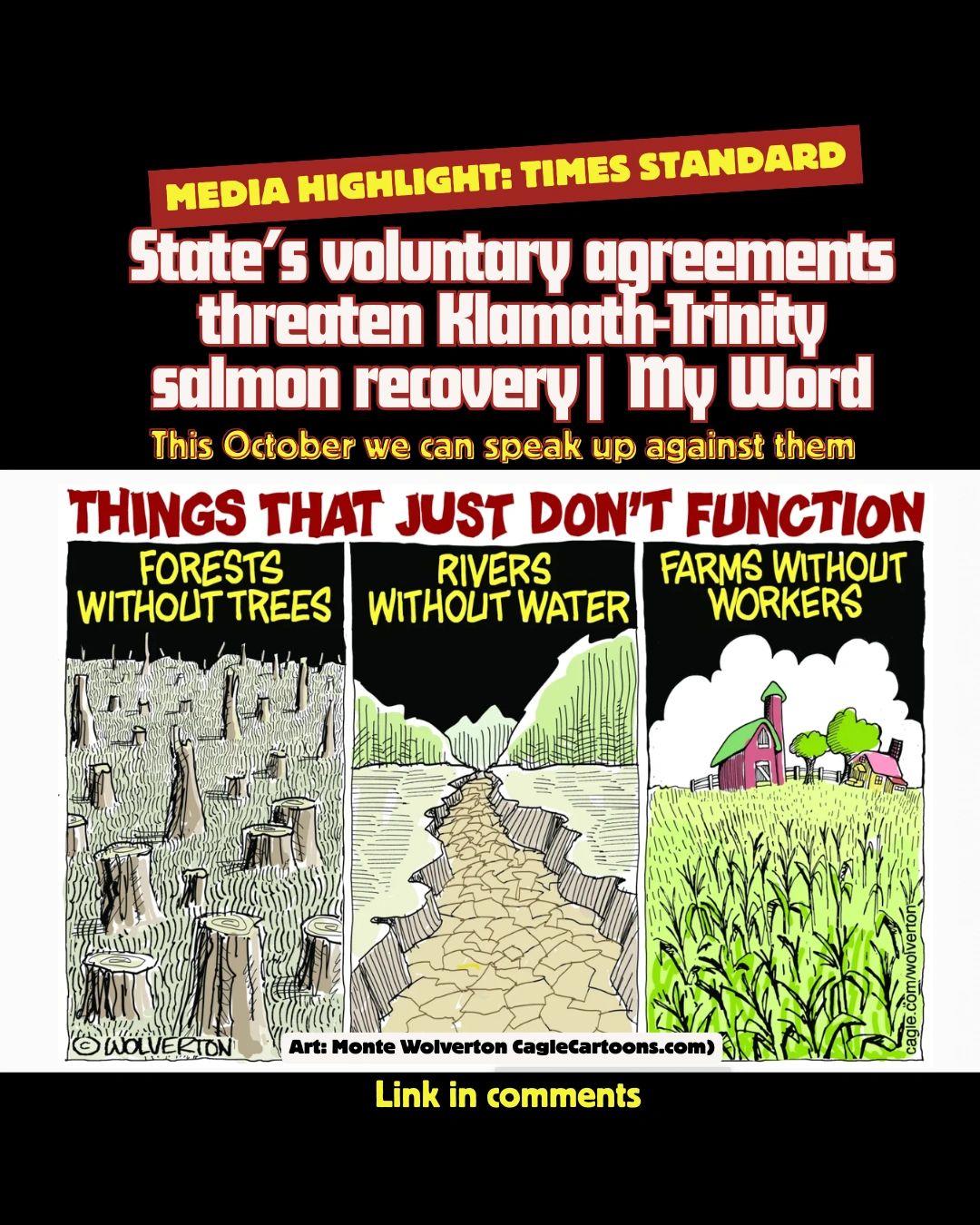
Media Highlight: TImes Standard My Word State’s voluntary agreements threaten Klamath-Trinity salmon recovery| My Word:
Right now, water is being released from Trinity River reservoirs to aid struggling salmon on the Klamath River. This federal action, part of the Lower Klamath Long Term Plan, and coordinated with the Hoopa and Yurok Tribes, should help avoid an otherwise imminent fish kill from low flows and warm temperatures. It will also help wash out toxic and attached algae, which plague the Hoopa Valley Tribe’s drinking water supplies and Klamath and Trinity River swimming and fishing activities.
Governor Newsom says this is the type of action that California supports. Working with Tribes, counties, and the federal government to protect rebounding salmon runs after a major dam removal project is a win-win. However these types of flow releases are threatened by California’s Bay Delta water quality decisions. If California’s Water Quality Control Board does not act to protect the Trinity River, and/or deny the Bay Delta Voluntary agreements, this water may not be available in future years.
The fact is the Governor and Water Board are letting politics and power decide who gets water, and that is a much bigger threat to the Klamath River, and salmon recovery, than people realize.
Northwest California’s Trinity River is world-renowned for its clean water and recreational opportunities. It is the biggest, and one of the coldest, Klamath River tributaries, and it is essential to Klamath salmon, local drinking water supplies, Tribal culture, and Trinity and Humboldt Counties’ economies. It is also a lifeline for California’s two largest Native American reservations and critical to coastal salmon fisheries.
Unfortunately, not long ago, nearly all of its water was diverted for use by Central Valley agribusiness interests 400 miles away. Tribal fishing and water rights decisions, and federal actions over the last 30 years, including the Lower Klamath Long-term Plan and Trinity River Record of Decision, aim to ensure sufficient water in the Trinity for river users, fish, and Tribes, but more than half of the river is still diverted. Unfortunately, the state continues to avoid taking necessary actions to protect the Trinity when making Central Valley and Sacramento River water decisions. Now it is possibly giving up the water we critically need to implement Trinity River flows as part of the Voluntary Agreements, without even putting minimal protections into the plans.
The fact is by promising more water than exists, and not putting real protections for the Trinity River into the Bay Delta Plan, the Board is practically guaranteeing more water will be diverted from the Trinity, and thus Klamath, Rivers. This could mean when it is time to release water to avert fish kills in the Klamath, it is not there, or too warm to help.
The need for temperature and storage protections in the Trinity is not a new issue to this board. We have been asking for Trinity River temperature and reservoir storage protections, and action to protect Humboldt and Trinity County water rights, for decades.
We asked when the Bay Delta Plan Update started, and during every comment period on the Voluntary Agreements and plan. We asked as part of the Sites Reservoir water rights proceedings. We ask whenever Water rights orders and Temperature Management Plans are assessed. Federal fish agencies and the Tribes have submitted letters outlining how lack of action on temperatures is killing endangered salmon in drought years and asked for minimal actions such as changing temperature targets. Fishermen have threatened legal action. Over the last 8 years at least 100 Tribal and other Klamath and Trinity River community members have traveled to Sacramento to testify at Bay Delta hearings, and every time the board thanks us for our comments, and then ignores them completely.
The state continues to ignore that Trinity water is critically needed in the Trinity River.
We invite anyone who supports Klamath restoration, North Coast fishing and the Trinity River to join us in testifying against the Voluntary Agreements in Sacramento or via Zoom on Oct 29th.
Redwoods Roundup: A roundup of the best stories from the Times-Standard this week.
It is time for action from California to protect the Trinity and Klamath Rivers. Fish can’t swim in broken promises.
Who We Are - Communities United for Water Protection

About Us
Communities United for Water Protection (CUPW) dedicates our goals to elevate water justice impacts by providing information, training, and organizing support for strategic action restoring our watersheds.
Our local advisors and contractors located throughout the region include Regina Chichizola, Sammy Jo Jerry (Karuk), Tenaya Gensaw (Yurok), Tom Stokely (Former Trinity County Supervisor), Margo Robbins (Yurok, Cultural Fire Management Council), Danielle Vigil Masten (Hupa, Former Chair/MMIP and family advocate), Toz Soto (Karuk Fisheries Director), Jackie Fawn David (Yuruk, Fishbear Studios), William Tinniswood (Oregon Fish and Wildlife), Nikcole Whipple (Round Valley Indian Tribes). We provide policy analysis, technical comments, litigation support, public hearing and processes support, planning, media alerts, education, training, campaign and event organizing.
k

Join Us in Taking Action For Our Rivers
Threats and Opportunities for the Klamath and North Coast
There are many threats to the Klamath River and North Coast currently. Most of these have to do with the need for instream flows for salmon, pollution permitting, and dam removal. Climate change is also taking a toll on the River.
What are the comment and engagement opportunities in the Klamath RIver and North Coast currently and how do they work?
The laws and processes that pertain to water issues in the Klamath and North Coast Rivers include: the Endangered Species Act (for threatened and endangered fisheries), the Federal Power Act and dam relicensing (via the Federal Energy Regulatory Commission), the Clean Water Act (which is administered by states), Tribal Water, Fishing Rights, and Tribal Trust Responsibilities, and several dam safety and consultations laws. The National Environmental Policy Act and California Environmental Quality Act are the laws that allow for disclosure and public comment related to water and land decisions. Both of these laws are being gutted currently.
Call to Action for the Trinity River:
New Federal Operations on the Trinity River: Comment periods start late summer 2026 and are expected to end in Spring 2027
The Bureau of Reclamation is currently redoing the Water Operations Plan and Biological Assessment and Opinion for the Trinity River salmon. This process decides how much water will go to the Central Valley Project and water agencies such as Westlands Water District in the Central Valley versus how much water will be retained in the Trinity River for fisheries. Currently the Bi-Op and Water Operations Plans tier to the 1999 Record of Decision (ROD) for the Trinity River. This ROD allowed for 49% of the Trinity River water to be used in the Trinity River for the first time since the Trinity River dams were approved (in 1964). The Yurok and Hoopa Valley Tribes are co-leads on this process, and there are several alternatives in the NEPA documents that will help the river. There is also an alternative that will take away the ROD and only allow for water releases as part of a very old state water quality control plan. There will be a public comment period and scoping hearings this late summer or fall. Even though the alternative that takes away the ROD is not ideal, and is probably illegal, it could be chosen by the Trump administration. Alternative 2 and Alternative 6 are much better. Protection of temperatures, creating a winter flow plan, and protection of carry over storage in the reservoirs are major issues for the Trinity River Biological Opinion.
A good Bi-Op can protect the Trinity from projects like the Delta Tunnel and Sites Reservoir, whereas a bad one would enable them.
State Temperature Protections and Management Plans Trinity River
California also has water rights conditions such as Order WR 90-5 that allow for temperature management plans for rivers impacted by the federal Central Valley Project, and they can have Water Quality Control Plans. The state has exercised this authority to get more water into the Sacramento River from Shasta Reservoir. In the Trinity they usually do not. If the Water Board applies Order 90-5 to the Trinity River and changes the temperature target to 53.5 degrees instead of 56, and creates carry over storage protections, it could guarantee that Trinity River salmon are protected if we get a bad Biological Opinion. We will be testifying at Water Board meetings on this and offering public comment training opportunities for folks who want to get involved.
Klamath Project Operations and Biological Opinion
The Trump administration has created a solicitors opinion (this is an internal legal document) that claims the Klamath Project in Oregon no longer has to follow that Endangered Species Act, and that the contracts with on-project irrigators are non-negotiable and take priority over instream flows, endangered species and even Tribal trust responsibilities. The Yurok Tribe is litigating this in court, but we will expect a new Biological Opinion and water operations plan for the Klamath River within the next year.
California Scott and Shasta instream flow and pollution permitting processes
The state of California is currently engaged in three critical processes in the Scott and Shasta Rivers, which are two out of the four major rivers that enter the Klamath River directly. The Shasta River is the lowest of the spring fed tributaries to the Klamath River, and is therefore critically important to the Klamath Salmon.
These rivers are currently dewatered by agricultural water users in low water and drought years, and they also suffer from extreme pollution and toxic algae due to agricultural return flows and the impacts of roads and cattle grazing. The Shasta also has a poorly operated diversion dam, the Dwinnel Reservoir, that needs to come out.
There is currently an instream flow setting process happening via the California State Water Resources Control Board for the Scott and Shasta Rivers and a law that sets “belly scraping flows” for salmon until this process is finished. There is also an interconnected groundwater issue in the Scott and Shasta that makes it so this process also needs to deal with groundwater pumping.
The North Coast Water Board is also currently doing a Waste Discharge Requirement permitting process. This process deals with pollution from agricultural waste. Beyond this, the state also has counties doing individual groundwater management plans.
Comment periods for the WDR (pollution plan) will likely be this winter. The comment periods for the Instream flow process will likely occur next spring and summer. There are opportunities to comment on the goals and methods around these processes now. We need to push for salmon recovery flows and water rights retirement.
Keno Reservoir
Keno dam and reservoir is the fifth of the PacifiCorp dams in the Klamath River. It is located in the natural reef that creates Lake Euwana below Klamath Lake in Oregon. It was transferred to the Bureau of Reclamation by PacifiCorp and not removed, yet. Keno reservoir is a huge pollution source on the Klamath as much of the Klamath Project’s tailwater and drainage from the Tule Lake and Lower Klamath Lake Wildlife refuges, and Upper Klamath Lake’s agriculture pollution are drained into the Keno Reservoir/Lake Euwana. The latter also does not work well. Keno reservoir should either be removed or retrofitted. Rebuilding the natural reef and doing a massive amount of wetland restoration will be needed if Keno is removed.
Eel River Dam removal
There are two Federal Energy Regulatory Commission (FERC) scoping hearings for the Project Potter Valley Hydroelectric Project surrender and decommissioning planned for Ukiah on June 23rd at 6:30 pm and 24th at 10am. FERC is analyzing the dam removal proposal. These are the initial scoping hearings. There will be more hearings within a year and there may be Humboldt hearings too. They have been requested. Currently PG&E supports dam removal and is asking for it, but the Trump administration is fighting it, including backing an utterly unrealistic plan by a Southern California entity to ‘buy’ the project and magically ship the water south.
Upper Klamath Basin
Oregon Water Resources Department's Critical Groundwater Area designation process
As part of its update to regulations for better managing Oregon’s declining aquifers, OWRD is engaged in Critical Groundwater Area designation processes for the most impaired regions. The agency is expected to soon start this process in the Klamath Basin, and fisheries and Tribal water rights advocates will need to have a strong presence to counter the agricultural industry’s demands.
Swan Lake Pumped Storage (Federal Energy Regulatory Commission)
The Swan Lake Pumped Storage Project would be a series of two reservoirs, pumping stations, and transmission lines that would be used for pumped storage energy production near Upper Klamath Lake in the Swan Valley. It would cause significant damage in cultural areas sacred to the Klamath and Modoc people and filled with cold groundwater in a region that is already so depleted that the state is likely about to designate it as a Critical Groundwater Area.
What is the Clean Water Act and How Does it Work?
.jpeg/:/)
An overview of Beneficial Uses, 303d(list) and pollutants and how the CWAimpacts North Coast waterways and upcoming processes on the Eel, Klamath, Bay Delta and Smith River watersheds
The Clean Water Act, the main federal law that protects surface water, is administered by states. Many states have an Environmental Protection Agency or Department of Environment Quality that leads their mandated work. In California, the EPA, state Water Resources Control Board, and Regional Water Quality Control boards are the primary implementing agencies.
The CWA calls for beneficial uses of waterways to be established and protected through specific federal and state processes. Beneficial Uses are things like recreation, cold and warm water specific spawning habitat, agricultural and industrial use, municipal drinking water, etc. THIS is how California interprets it.
There is now also a process underway to establish Tribal Beneficial Uses, such as culture and subsistence fishing, and develop agency policies to protect them. Beneficial uses are threatened by pollutants such as pesticides, sediment, nutrients (both chemical and things like fertilizers and organic waste), mercury, and extreme temperatures. If the issues are too bad, and there is monitoring information to prove impairments, they get added to the Clean Water Act’s 303(d) list and are supposed to be addressed by a pollution control plan. Extreme pollution from one site may also have to have toxins cleaned up. These are usually designated as Superfund sites.
There is both point (meaning mainly a pipe adding pollution, such as a water treatment plant or factory) and non point pollution (which is more like cow fields, large scale ag spraying on fields, and other forms of water run-off that carry contaminants) pollution. Point source pollution requires a federal NPDES permit. Non-point pollution is regulated in different ways in California, but is mainly through a Waste Discharge Requirement, prohibition, or conditional waiver.
California also has the Porter Cologne Act and a more explicit state version of public trust doctrine as additional clean water laws. These policies help deal with unreasonable use of water, violations of the public trust (meaning best possible use for everyone), and things like non-point pollution and wetlands protections in ways the federal Clean Water Act does not. There is also a process occurring to regulate groundwater in California through the Department of Water Resources and local counties. Sustainable Groundwater Management Act (SGMA) .
The State Water Resources Control Board, commonly called the Water Board, deals with statewide waivers, anything to do with flows and water rights, guidance on establishing beneficial uses, 401 permits which apply mainly to Federal Energy Regulatory Proceedings (FERC) and things like large dams and in river work, approving regional board actions, and big controversial pollution permits.
The nine semi-autonymous regional water boards cannot really work on flows or 401 permits but are in charge of establishing pollution control plans for their watersheds, regional specific conditional waivers for pollution sources such as; dairies, vineyards, or other potentially polluting sites, and things like establishing the 301(d) list and Total Maximum Daily loads. The 301(d) list is the list of what water bodies are impaired for, i.e. what pollution is making it unable to meet the beneficial uses. Once listed, such an impairment needs to be remedied through a permit or TMDL. A TMDL is pretty much an assessment of how much of this listed pollutant a watershed can handle. The waiver or WDR in many ways is how the TMDL is dealt with. Waivers and WDRs can also apply, however, to certain types of pollution even without a 303(d) listing or TMDL. An example is the Smith River Lily Bulb pollution WDR.
Tribal Trust, water rights and consultation: Water rights, even federal ones, are administered by states, and every state has a different water rights system. California’s is possibly the most confusing and convoluted as it involves riparian, prior appropriations, and other claims processes that often conflict with one another. A complication in all of this is Tribal Trust responsibility. Tribal reserved water rights, Tribes, and Reservations are all federal policies or entities. This means that often the federal government - as Tribal Trustee - has to work with the Tribes to negotiate adjudicating and administering water rights with the state. How the feds define being the Trustee changes with every election and can be confusing. California now has a Tribal consultation law, but most formal Tribal consultation is done on the federal government to government level. Another complication is that California’s treaties were never signed by the federal government, but were signed by Tribes. Therefore many of California’s reservations were established by acts of Congress rather than through treaties. There are also issues around Racherias and terminations. This means that California’s Tribal water rights and Tribal rights laws are still being figured out in court.
Waste Discharge Requirements and Waivers: A Waste Discharge Requirement, or permit, is supposed to stop an impairment of a waterway. It can say no more discharge of the pollutant is allowed at all, or it can have numeric or narrative limits of what pollution is allowed. It can deal both with the 303(d) listed and non listed pollutants and issues beyond the 303(d) listings. It can apply to only one polluter, or a group of polluters such as the Lily Bulb farmers or the Scott River ranchers and farmers.
There are, however, parameters of what the board can do. A conditional waiver is much less restrictive and helpful than a WDR but can put some management requirements and monitoring requirements on a polluter.
A TMDL alone without an action plan is not really helpful at all unless a 401 certification or NPDES permit or something like that that involves a large state of federal decisions is to happen in the watershed.
What is happening on the Smith River?
In the Smith River watershed, farmers have used many fungicides and pesticides near the estuaries for many years, including in the winter.. They spray a lot and use very dangerous chemicals like Copper, Diuron, 1,3-Dichloropropene (1,3-D), Metam Sodium, Ethoprop and imidacloprid, which are known to kill fish. This has been happening with no Endangered Species Act or Clean Water Act permit for at least 30 years and has led to 303(d) listings, fisheries declines and massive contamination of both groundwater and surface water. Grazing is also a big issue in this area. People had to fight for monitoring to prove the contamination, and this monitoring was used by a couple of us to formally petition the board for WDRs. These requirements are being developed now, and one is proposed and may be approved at the August 6th meeting. This waiver does not stop wet weather spraying or ask for a no discharge requirement for dangerous chemicals and therefore is not protective enough. https://www.waterboards.ca.gov/northcoast/board_info/board_meetings/08_2026/index.html
What is happening on the Scott and Shasta Rivers?
The Scott River and Shasta Rivers were listed for temperature, sediment, low dissolved oxygen, and other pollutants decades ago. A TMDL was approved in 2006 or so, but has yet to be implemented. For the last 20 years, the board issued non-protective waivers which allowed the farmers to continue to pollute if they do minimum actions.
The regional board is also finally working on a WDR in the Scott and Shasta, but staff is also asking for another 5 year waiver after the last ask 2 years ago was denied by the board. We will oppose this waiver extension both at the public comment at Thursday’s meeting and at the Oct meeting in Yreka.
Where does the Instream Flow Process and State board fit in?
Some of the pollutants in the Scott and Shasta Rivers, and many of the impacts to species, are due to over allocation and diversion of surface water, and overpumping of interconnected groundwater. Due to this the regional board made a flow recommendation in the Shasta RIver TMDL. They were not able to cut diversions off however. Only the State Board can do that. During the last drought, the Governor put emergency measures in place for the Scott and Shasta regulating diversions to allow for “bellyscraping” minimum instream flows in the spring, summer and fall. After this we began to push for a long term plan and restoration flows, and the Karuk Tribe was able to get a state bill passed keeping the belly scraping flows in place until this in-stream flow process happens. An added complexity is the California Department of Fish and Wildlife makes flow recommendations to protect endangered fish as part of this and has not done its due diligence on recovery flows - focusing instead on the minimum required to prevent extinction. Another one is that Tribal Beneficial Uses have not been finalized. The proposed flow regime is expected to be released for public input in early 2027.
Why is there no permit or waiver for the chemical use by timber companies in the Klamath?
The state has a general permit but Green Diamond has not enrolled. This may be a violation of the Clean Water Act, but we need to prove the chemicals are getting into waterways for the Water Board to get involved. Then we can demand a permit
Experienced professionals dedicated to your success.
Proven results that speak for themselves.
Contact Us
We are here to help. Contract regina@waterprotectors.org or 541 951-0126 for more info or support.